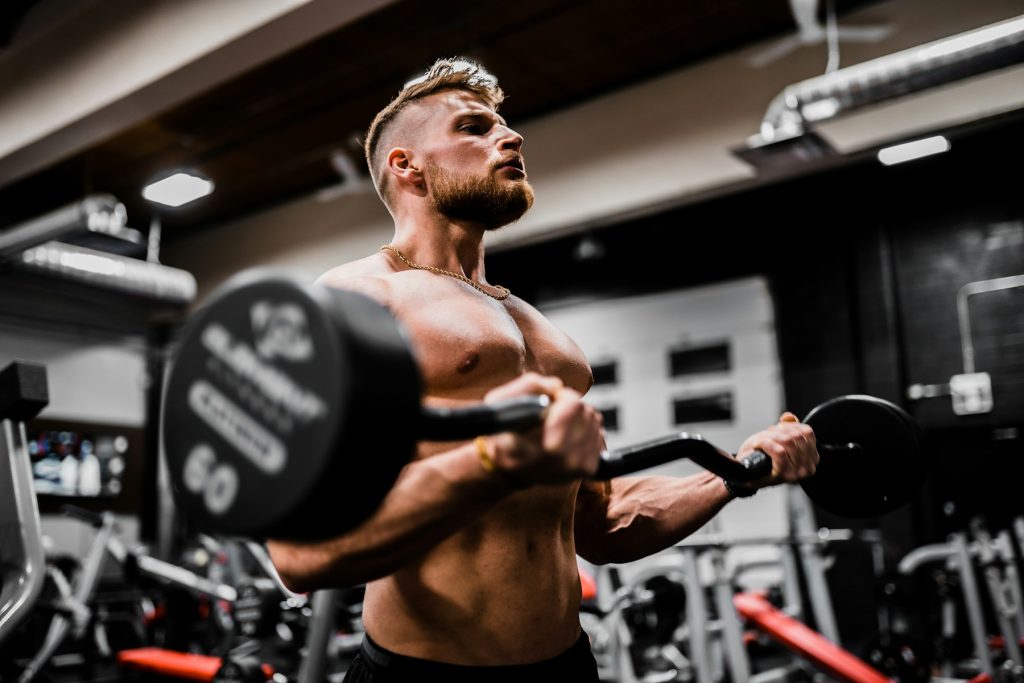
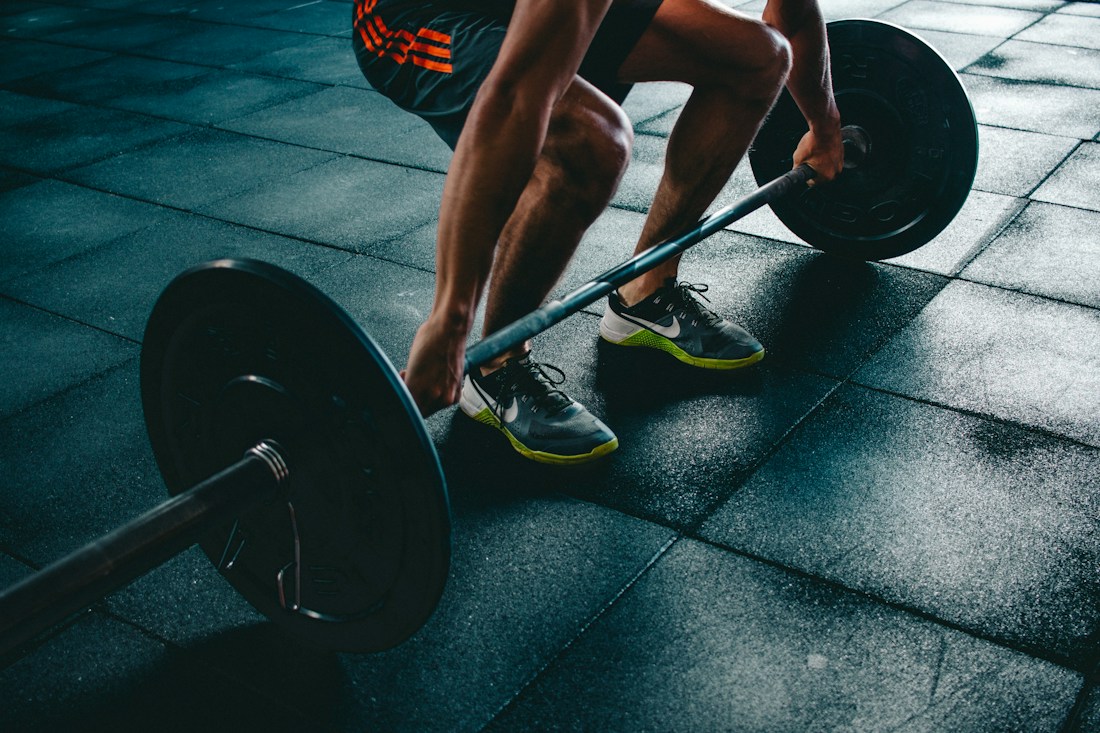
Choosing a training weight does not have to begin with a perfect number. Start with your goal, warm up, and choose a load that lets you repeat the movement with stable technique.
Decide what the weight is for
If your main goal is maximum strength, heavier loads and practicing the specific lift matter. If your goal is muscle growth, a wider range of loads can work when the sets are challenging and technique is consistent. You do not need the heaviest possible weight in every session.
Research comparing lower and higher loads has found similar muscle growth in many conditions, while heavier loads are often useful for improving a one-repetition maximum. Treat these findings as guidance, not a promise for every person.
Use warm-up sets to find today’s load
Your best weight can change with sleep, stress, food, and the order of exercises. Begin with a light warm-up, then add weight gradually. Stop adding when you can complete the target repetitions with a controlled range of motion and no pain.
For example, before a work set of 8 repetitions, perform a few easier sets and increase the load only if your technique remains steady. Warm-up sets should prepare you; they do not need to exhaust you.
Leave some repetitions in reserve
Repetitions in reserve, or RIR, means the number of good repetitions you feel you could still complete. A beginner can start by finishing a set while about two or three controlled repetitions remain. This is easier to repeat than taking every set to failure.
When the last repetition becomes slow, your posture changes, or you feel sharp pain, stop the set. Muscle effort and pain are not the same thing.
Record the work sets with GROWTH
Record the exercise, equipment, load, repetitions, sets, RIR, rest time, and any unusual discomfort. GROWTH lets you check the previous record before the next workout. That makes it easier to choose a realistic starting weight rather than guessing.
Progress is not only adding weight
Progress can mean one more good repetition, the same work with less fatigue, a steadier range of motion, or a shorter rest period under comparable conditions. If you can do 8 repetitions comfortably for several sessions, you might try 9 or 10 before adding a small amount of weight. Keep the change small enough to protect technique.
If pain, numbness, dizziness, or a clear loss of control appears, stop and seek appropriate advice.
A simple record to keep
- Exercise and equipment
- Load, repetitions, and sets
- Approximate RIR
- Rest time
- Technique notes or discomfort
Sources
- Carvalho et al. Muscle hypertrophy and strength gains after resistance training with different volume-matched loads. 2022.
- Lopez et al. High-load versus low-load resistance training. 2021.
- Refalo et al. Influence of Resistance Training Proximity-to-Failure on Skeletal Muscle Hypertrophy. 2023.
This article is general information for healthy adults. Consult a medical or exercise professional when pain, illness, or an injury is involved.