Before chasing heavier weights, build the same setup each time. This guide checks your feet, eye line, grip, shoulders, and rack position so beginners can create a repeatable bench press routine.
Keep your feet on the floor
Place both feet firmly on the floor first. Foot position differs from person to person, so find a stance that keeps your heels down and your hips and shoulders from shifting sideways. You do not need to drive hard through your feet. Prioritize a stable position that you can reproduce on the next set.
Line up your eyes with the bar
When you lie on the bench, use a position where your eyes are not far in front of or behind the bar. If the bar travels a long way over your face when you unrack it, your shoulder and wrist positions can change too. Start with a rack height that lets you unrack without fully locking out your elbows.
Check your grip and wrists
Find a grip where your forearms are roughly vertical when the bar is lowered. Place the bar across the middle of your palms so your wrists do not bend back excessively. Simply checking that both hands are placed evenly makes future training notes easier to compare.
Set your shoulders on the bench and lift your chest gently
Think of placing your shoulder blades against the bench and gently lifting your chest. You do not need to force a large lower-back arch. Check that your shoulders are not shrugging and that your head stays down. If you feel pain or numbness, stop and review the load and your position.
Pause after unracking
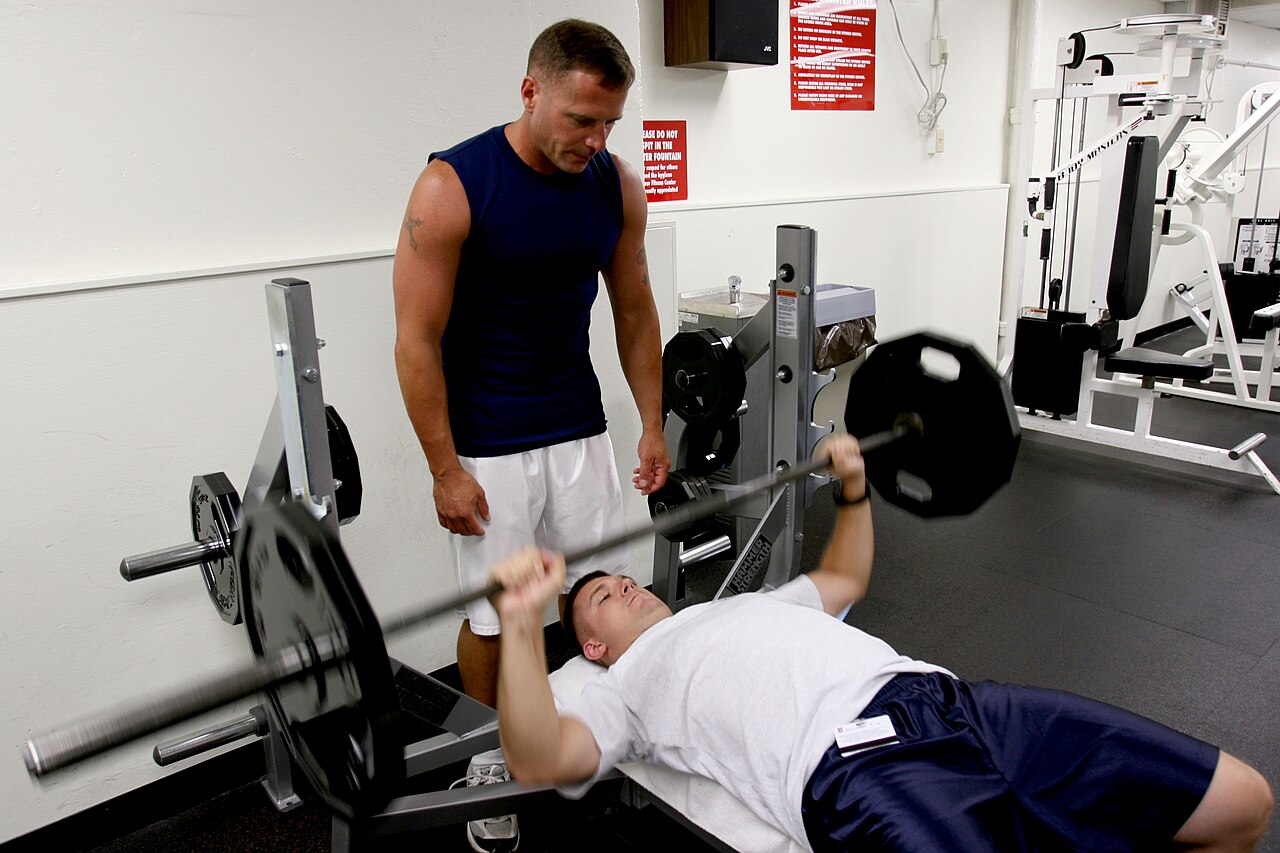
After you take the bar out of the rack, do not lower it immediately. First, align your arms and shoulders. If the bar swings from side to side, the load, rack height, or grip may not be right for you. For a new weight or whenever you feel uncertain, train with a spotter in a safe setting.
Record the five points
Along with weight and repetitions, leave a short note such as “feet stable,” “slightly narrower grip,” or “rack one notch lower.” Perfectly identical form is difficult, so naming the differences makes the next adjustment more specific.
Strength training is built around a manageable effort and sound movement. Before adding weight, make the setup consistent and check whether you completed the lift under the same conditions.